Blogs
After-School Meals: Nutrition Support for Healthy Growth & Learning
It is 5:30 pm, your 12-year-old child returns home after an intense PT session, and heads straight to the kitchen. They search for food here and there and find a half-roti and a little bit of rice. And it is not enough for them. This is the story of millions of children in India. Nearly 35% of children under 18 experience food insecurity. For many of these children, the midday meal at school is their only guaranteed nutrition for the day.
An effective after-school meals program can bridge this critical nutrition gap, ensuring every child has access to the food they need to thrive.
At Shankar Baba Foundation, we've seen it countless times: bright, capable children whose potential is being stolen by something as basic as an empty stomach. The hours between the last school bell and dinner aren't just a scheduling gap; they're a critical window when children need nutrition to fuel their growth, learning, and dreams.
Meals are the foundation of a thriving childhood. They fuel not just bodies but minds, supporting concentration in evening study sessions and emotional resilience. All of this can be achieved through a proper after-school child nutrition program.
Why after-school meals matter more than you think
We have worked with hundreds of children over the years, and we have learned something important: food isn't just fuel. It's a possibility. When a child receives a nutritious meal during those critical after-school hours, everything changes:
- Their bodies get stronger: Between ages 6 and 18, children go through massive physical changes. Skip meals during this time, and you are not just dealing with nutrient deficiency but also impacting their health for a lifetime. The better the meal, the better the growth.
- Their minds work better: “A full stomach allows the brain to be hungry for knowledge.” Here’s what surprised us more: the kids in our program who received after-school meals performed better in academics. They showed improved focus, memory, and increased activeness during the daytime.
- Their Emotions Stabilize: Being patient when you are hungry is nearly impossible. Even adults don’t show patience at such times. When kids get regular meals, their moods improve, and they are less irritable, more resilient, and ready to face challenges. We have seen these changes when parents focused on kids’ after-school meals; they say kids are calmer at home.
The Importance of After-School Meals for Child Development
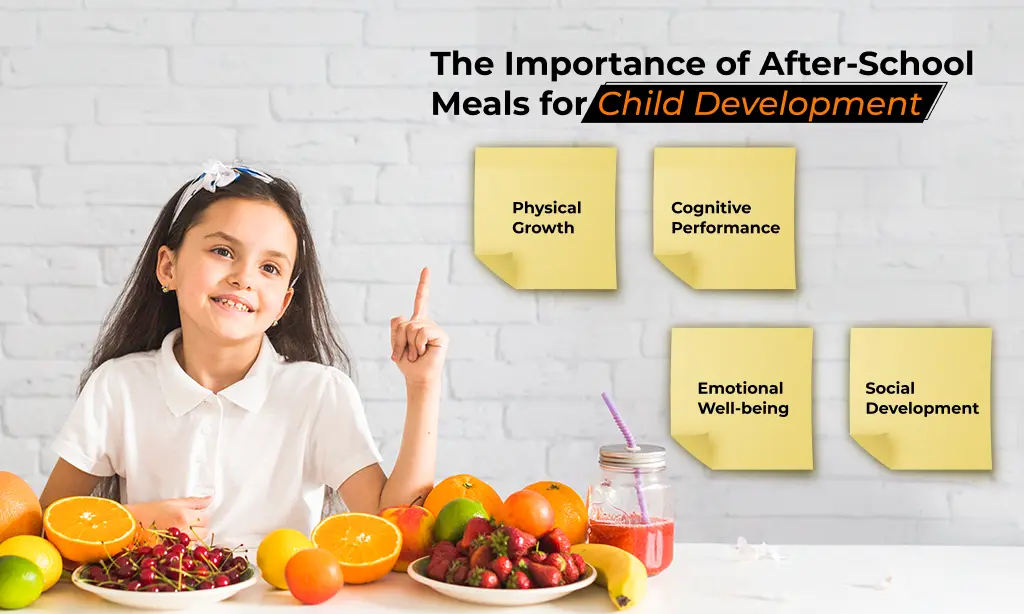
Nutrition and development are inseparably linked. When children receive consistent, nutritious meals for kids, the benefits extend across multiple dimensions of their lives.
Physical Growth: Adequate protein, calcium, and vitamins support bone development, muscle growth, and overall health during crucial growth years.
Cognitive Performance: Studies show that well-nourished children demonstrate improved memory, concentration, and problem-solving abilities. How nutrition improves academic performance and focus is well-documented, with children who receive proper meals showing up to 20% better test scores.
Emotional Well-being: Hunger affects mood and behavior. A regular, balanced diet for kids helps stabilize blood sugar levels, reducing irritability and supporting better emotional regulation.
Social Development: Shared meal times in after-school programs create opportunities for social bonding, teaching important life skills like sharing, communication, and cultural awareness.
Healthy Meals for Children in After-School Programs
Creating effective meal support programs means understanding what actually belongs on a child's plate and addressing hunger and nutrition gaps in underprivileged kids.
What's on the Plate: What Qualifies as Nutritious After-School Meals
A truly healthy eating plan balances multiple food groups to deliver complete nourishment. The ideal plate includes:
Whole Grains (like brown rice, whole wheat roti, or millets) provide sustained energy.
Protein (dal, eggs, paneer, chicken, or soya) for muscle development and satiety.
Vegetables and Fruits deliver essential vitamins, minerals, and fiber.
Healthy Fats (from nuts, seeds, or ghee) support brain development.
Dairy or Alternatives, ensuring adequate calcium for growing bones.
A Perfect Meal for All Students
Here's a weekly nutrition guide that covers essential needs for both vegetarian and non-vegetarian students:
Monday: Vegetable pulao with raita and a small bowl of fruit
Tuesday: Whole wheat pasta with mixed vegetables and paneer/chicken chunks
Wednesday: Dal khichdi with curd and seasonal vegetable curry
Thursday: Egg/paneer sandwich on multigrain bread with cucumber salad
Friday: Brown rice with sambar, stir-fried greens, and buttermilk
Saturday: Vegetable/chicken biryani with raita and sprouts salad
Sunday: Whole wheat dosa with sambhar, coconut chutney, and fresh juice
This rotation ensures variety while meeting nutritional requirements, keeping children engaged and properly nourished throughout the week.
Programs and Pathways: Accessing Free Meals for Children
Several avenues exist for families seeking free meals for children and nutrition assistance:
Government Initiatives: Programs like Mid-Day Meal schemes in some regions extend to after-school hours, providing subsidized food to children from economically disadvantaged backgrounds.
NGO-Run Programs: Organizations like Shankar Baba Foundation operate comprehensive after-school meals programs, ensuring children receive nutritious meals for kids along with educational support and activities.
School-Based Extensions: Some schools partner with community organizations to offer meal assistance as part of extended learning programs.
Community Kitchens: Local community centers and religious institutions often provide food support for youth in need.
Implementation in Practice: Creating Effective Nutrition Support.
Successful child nutrition support initiatives share common elements that make them truly impactful:
They prioritize culturally appropriate foods that children will actually eat, involve children in menu planning to increase acceptance, maintain consistent meal times, routine, and reliability, ensure adequate portions suitable for growing appetites, and focus on fresh, locally-sourced ingredients when possible.
The most effective programs also incorporate nutrition education, teaching children about healthy eating habits and empowering them to make better decisions about their diet and overall health.
A Quick 5-Minute Healthy Snack Idea for Everyone
Not every after-school situation allows for full meals, but healthy snacking can bridge gaps effectively. Here are three nutritious options that take just minutes to prepare:
Peanut Butter Banana Roll: Spread peanut butter on a whole wheat roti, place a banana in the center, roll it up, and slice into pinwheels.
Chana Chaat: Mix boiled chickpeas with chopped onions, tomatoes, cucumber, lemon juice, and chaat masala for a protein-rich, filling snack.
Fruit and Nut Mix: Combine seasonal fruits with a handful of mixed nuts and a drizzle of honey for quick energy and sustained nutrition.
Conclusion
After-school meals programs are more than just food assistance—they're investments in children's futures. When we ensure that young people have access to nutritious meals for kids during those critical after-school hours, we're supporting their physical health, academic success, emotional stability, and overall development.
Organizations like Shankar Baba Foundation recognize that empowering youth starts with meeting their basic needs. Through comprehensive programs that include child nutrition support, we create environments where every child has the opportunity to thrive, regardless of their economic circumstances.
Whether you're a parent seeking resources, an educator looking to support your students, or someone interested in contributing to nutrition and food security initiatives, remember: every meal matters. Every nutritious plate creates possibilities for a child to grow stronger, learn better, and reach their full potential.
Frequently Asked Questions
Q1: What is an after-school meals program, and who can access it?
An after-school meals program provides free or subsidized nutritious meals to children during after-school hours, typically between 3 PM and 7 PM. These meal support programs are usually available to children from low-income families, those attending after-school activities, or students in specific community programs. Many NGOs, schools, and government initiatives offer these services. Contact local community organizations or schools to learn about free meals for children in your area.
Q2: How do after-school meals improve academic performance and focus in children?
Proper nutrition directly impacts brain function and learning capacity. When children receive a balanced diet, their blood sugar levels stabilize, supporting better concentration and memory retention. Studies demonstrate how nutrition improves academic performance and focus, showing that well-nourished children achieve improved test scores, better attendance, and enhanced participation in class activities. The protein, complex carbohydrates, and essential vitamins in healthy meals fuel cognitive development during critical growth years.
Q3: What are the health benefits of nutritious meals for kids in after-school programs?
Healthy meals for children in after-school programs support comprehensive development across physical, cognitive, and emotional dimensions. Proper child nourishment provides essential nutrients for growth, strengthens immune function, improves concentration and learning capacity, stabilizes mood and behavior, and builds healthy eating habits that last a lifetime. A balanced diet for kids during these crucial hours helps address hunger and nutrition gaps in underprivileged kids while promoting overall well-being.
Q4:Well-being, can parents support their children's nutrition if after-school meal programs aren't available?
Parents can prepare simple, nutritious snacks and meals in advance, focusing on whole foods like fruits, nuts, boiled eggs, sandwiches with vegetables, or traditional options like chana chaat or vegetable parathas. Planning a weekly meal schedule, involving children in food preparation, and keeping healthy options readily available helps ensure consistent nutrition. Community resources, local food banks, and school counselors can also provide guidance and support for food assistance for youth.
Q5: What is the importance of after-school meals for child development beyond just nutrition?
Beyond addressing hunger, after-school meals programs create structured environments for social interaction, teach children about nutrition and healthy eating, provide opportunities for cultural exchange through diverse meals, and often include recreational or educational activities. These programs demonstrate the importance of after-school meals for child development by offering homework assistance, mentorship, and safe spaces for children during after-school hours, supporting holistic growth and community building while ensuring food security for vulnerable youth.