Blogs
Leadership Skills for Teenagers: 5 Essential Traits to Master Before Turning 18

Developing leadership skills for teenagers is more essential now than ever before. In an ever-changing world, young people who develop strong leadership qualities will be able to handle challenges with confidence and become leaders of positive change. Leadership skills for teenagers offer a powerful platform for personal growth, communication, and resilience, so young people will make the transition to adulthood and the future workforce easier and with integrity. Learning leadership skills during these years will encourage teens to take action and be responsible in school, sports, or in community projects, helping them stand out as young adults who are accountable for their actions.
In this article, we will discuss why developing leadership development for teens is important. Also, we will identify five leadership qualities that are important in leadership development. Then we will look into the best ways to teach these skills and how teens can address common issues encountered when developing their leadership skills.
Why Is Leadership Development Important?
Leadership is not only for CEOs and politicians. It is also a necessary part of character building and personal growth. Leadership development is unbelievably important for all individuals, but especially teens. When teens learn about leadership development, they gain a better sense of self-awareness and responsibility, which leads to better decisions and better relationships.
As John Quincy Adams once said, “If your actions inspire others to dream more, learn more, do more, and become more, you are a leader.” This truly embodies the significance of leadership: it allows teens to have a positive influence on their surroundings.
Moreover, leadership development for teens will lead to effective communication, empathy, adaptability, and problem-solving, all of which are must-have skills in life. Life skills and soft skills arm teens for real-world situations in college, jobs, and social groups.
Evidence has demonstrated that teenagers who work on leadership-based activities have a high self-esteem exchange for high academic success. Learning leadership will endow the young with accountability and resilience so that they would rather challenge difficult things than run away from them.
The 5 Essential Leadership Qualities
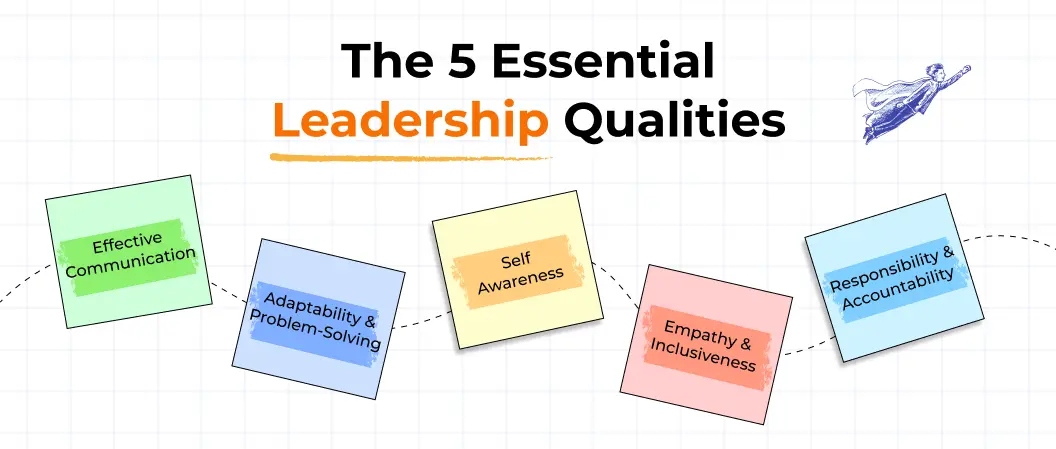
What does it really take to be a youthful leader? While there certainly are a multitude of leadership traits, our compilation of five essential leadership qualities that we should strive to work on includes:
Effective Communication
Leaders articulate ideas and listen well. Communication is not just about talking; it is about common understanding. Teens who acquire this skill may be able to diffuse conflicts among peers, inspire them, or foster collaboration among them.
Example: Greta, the young climate activist, has been able to inspire millions by vocalizing her concerns about climate change. Possessing the authority to deliver clear and compelling speeches to a wide range of audiences highlights that effective communication lies at the
heart of leadership.
Adaptability & Problem-Solving
Adapting to change and being creative to solve problems is a must. Leaders maintain calmness and professionalism under pressure. Instead of dwelling on problems, they find solutions and remain flexible.
Example: During the COVID-19 pandemic, young entrepreneurs and student leaders quickly adapted by converting their projects into online initiatives, showcasing innovation and resilience. However, despite their efforts, the widespread disruptions limited their ability to create the intended impact.
Self-Awareness
Understanding one's strengths, weaknesses, and emotions allows teens to lead with authenticity and humility. With self-aware leaders, there is sometimes a question of when to ask for assistance and when to manage stress by themselves.
Example: Oprah Winfrey has often discussed the significance of self-awareness in leadership and stated, "Real integrity is doing the right thing, knowing that nobody's going to know whether you did it or not." Such self-awareness elicits trust and respect.
Empathy and Inclusiveness
Leaders connect with others through understanding and valuing their feelings and perspectives. Demonstrating empathy encourages an environment of indebtedness in which everyone feels heard and motivated.
Example: Malala Yousafzai leads with empathy by standing for girls' education all over the world, relating to their sufferings, and raising their voices.
Responsibility and Accountability
A true leader owns up to the consequences of his actions, whether good or bad, thus inspiring others.
Example: Teen climate activists organizing cleanup programs or fundraising events exhibit responsibility to the extent that they promise to follow through and thereby encourage others to join them.
How to Teach Leadership Skills to Youth
The teaching of leadership skills in youths implies a combination of hands-on experience, insight, and real examples. Schools, clubs, and parents thus share the responsibility for that.
-
Hands-On Opportunities to Demonstrate Leadership
Teens are encouraged to lead and play a significant role in clubs, sports teams, or volunteer organizations. Planning projects and events would build confidence in individuals and give them some degree of hands-on experience.
Industry Example: In tech, companies like Google nurture many youth leaders through various coding camps and innovation challenges wherein teens lead teams and present ideas.
-
Mentorship
Mentor-mentee pairs maintain regular contact in the form of guidance and feedback to foster the development of leadership traits and to assist with teen challenges along the way.
Industry Example: Many startups encourage youth mentors in the business world where budding young entrepreneurs learn from older leaders, bringing about the acceleration of the mentees."
-
Leadership Programs and Workshops
There are formal leadership programs that entail training in communication styles, conflict resolution, and decision-making.
Industry Example: Nonprofits such as Junior Achievement provide workshops for teens in building soft skills and understanding leadership within settings such as finance and entrepreneurship.
-
Reflection and Self-Awareness Exercises
Instances abound for encouraging teenagers to keep journals or make self-awareness more natural through group discussions. Self-awareness ranks high among the few leadership traits.
Industry Example: Institutions like The Global College capitalize on self-reflection in their curriculum to promote personal growth to a respective level alongside academic pursuit.
Overcoming Common Challenges
Teenagers have a hard time realizing opportunities and developing leadership abilities due to fear of failure, peer pressure, assertiveness issues, and more. Here are some ways to help with these barriers:
Fear of Failure
Failure is achieving. Encouraging teens not to see mistakes as setbacks but as chances to learn is one way to change perception. Thomas Edison admitted to, "I have not failed. I just discovered 10,000 ineffective methods.
Peer Pressure
Being different is hard for teens. Encouraging teens to stay true to themselves and choose positive influences who will encourage their leadership path will be beneficial.
Lack of Confidence
Confidence is an outcome of experience. Creating opportunities for repeated leadership practice, offering compliments on effort, and providing constructive feedback will build self-esteem.
Balancing Leadership with Academics
Managing time well is very important. Teach the teens to prioritize tasks and to set realistic goals, so they keep the balance.
Conclusion
For younger people, mastering the art of leadership skills for teenagers is not about holding titles or guiding small groups. It's about fostering a mindset attuned to growth, empathy, and responsibility. These cardinal essential leadership qualities of effective communication, adaptability, self-awareness, empathy, and accountability equip our young people to face life's challenges and inspire others.
Giving focus to youth leadership development for teens through practically oriented activities, mentoring, and training institutions equips the young generation to exercise leadership with confidence and integrity. According to Nelson Mandela, "It is in the character of growth that we should learn from both pleasant and unpleasant experiences."
Giving attention to leadership development today will ensure the development of leaders with hearts and character for tomorrow.